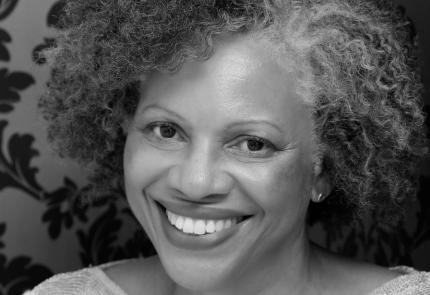
Mary Scarlett

A journey from social work to research  

As the only social worker in my current team, having recently transitioned from children’s social care to education, I recognised that the research topic was more than a schools performance issue. With further interrogation, I could help the borough to identify the possible systemic issues contributing to poor attainment for Black and Minority Ethnic students.

NIHR funding was instrumental in offering me the opportunity to develop my research capabilities. It enabled access to undertake a research module at Kingston University, access specialist databases (such as EBSCO and iCat), peer-reviewed journals and attend relevant workshops. 

Why I always ask 'Why?'

With over three decades in social work, my passion has always been clear: making a difference for children and families.  I currently work as the lead training and development officer safeguarding schools within a London Local Authority, while also sharing knowledge as an associate fellowship Higher Education Association teaching consultant at Kingston University.  

My career has been anything but linear—each role shaped by curiosity and a commitment to better outcomes. From sitting on the bench as a Magistrate, guiding decisions as an Independent Review Chair, advising family courts through the Children and Family Court Advisory and Support Service (CAFCASS), to consulting internationally with the US Agency for International Development (USAID), I’ve learned that asking the right questions often leads to the right solutions.  

I am professionally curious, known by my colleagues to always be asking ‘Why?’ Because in social work, understanding the ‘Why?’ behind actions, systems, and decisions is what drives meaningful change. 
I believe research isn’t just academic, it’s a powerful tool to inform practice and improve interventions. When we combine evidence with empathy, we create strategies that truly transform lives.

Mary Scarlett

Exploring underachievement of Black and Minority Ethnic students 

The primary research question guiding my literature review was: What are the factors contributing to the continuing underachievement of Black and Minority Ethnic (BME) students in London schools? My aim was to shine a spotlight on the complex interplay of systemic inequalities, institutional racism, teacher expectations and the broader policy and legislative context that shapes educational outcomes for BME students.  


Black boy smiling in a classroom in the foreground with a white girl and black girl in the background

More than a performance issue: A social work perspective  

From a social work perspective, I feel this issue is more than a schools performance issue, and more about a child’s life journey through an adverse system. It is not just about academic results; it is about safeguarding, wellbeing and life chances. 

It is well documented that poor attainment and outcomes in education have a long-term impact on a young person’s ability to achieve socio-economically and contribute to health inequalities. Poor educational attainment is also a strong feature in the lives of young people who become involved in the criminal justice system. 

I believe the continued prevalence of low attainment and poor educational outcomes for this underserved community should be recognised as a safeguarding and public health issue. The implications are not only personal and familial, but also fiscal and societal, affecting the future of our wider communities and society.

Mary Scarlett

My approach to finding out “why?” 

By reviewing decades of reforms, landmark reports, and contemporary data, my review sought to understand why, despite numerous policy change and education initiatives, the attainment gap and high rates of exclusions for BME students persist.  

I chose a Critical Race Theory (CRT) perspective to highlight the need for a race-conscious approach to educational research and policy.  This approach emphasises the role of teacher diversity, culturally sensitive curricula and anti-racist approaches in creating a more inclusive and supportive environment for BME students. 

While acknowledging the complex and multifaceted policy and legislative context surrounding the underachievement of BME students, 80 years of reforms designed to improve educational outcomes for all pupils, have disproportionately left some groups behind.  

I disagreed with the terminology BME and (BAME) Black Asian and Minority Ethnic  used interchangeably in various papers. This terminology suggests these groups are homogenous and does not recognise or reflect the important cultural and intersectional differences that exist.  

As a researcher, I was also aware of my personal lived experiences, as a Black student in the English education system during the 1970s and acknowledged there was potential for bias.  

My review adopted a systematic approach to identifying relevant literature. Although not a systematic review, this methodological approach enabled me to identify gaps in the current literature, understand the evolution of the subject and areas on which to build on previous research. The review engaged an adapted Critical Appraisal Skills Programme (CASP) tool questionnaire, using focused key questions and relevant search terms on EBSCO database research platforms.  

Uncovering decades of evidence of a systemic problem 

I identified several significant reports including: ‘You got a pass, so what more do you want?: race, class and gender intersections in the educational experiences of the Black middle class (Gillborn, D & Rollock, N et al 2012). This paper was funded by the Economic and Social Research Council (ESRC), and used in-depth interviews with 62 Black Caribbean parents, making it the largest qualitative study of its kind in the UK at that time. 

In their paper ‘How, still, is the Black Caribbean child made educationally subnormal in the English school system?’, Wallace & Joseph-Salisbury (2022), revisit Bernard Coard’s 1971 seminal paper on the educational sub-normality of Black Caribbean children in the British school system. Coard argues: "The underachievement of Black Caribbean youth, not as genetically designed but socially constructed, not culturally inherent but politically conditioned," Bernard Coard, 1971.

Government-commissioned reports, such as the Rampton Report (1981)  revealed a disproportionately high percentage of suspensions, exclusions and referrals to Disruptive Units, concluding that the main problems were low teacher expectations and racial prejudice among white teachers and society. 

The Swann Report (1985)Education for all’, made 71 recommendations, including addressing the underrepresentation of ethnic minorities in the teaching profession. 

The Comprehensive School Movement of the 1960s and 1970s, which replaced the 1944 tripartite system, attempted to make education more inclusive, providing common curricula open to all students, but these reforms failed to consider cultural and language difference. This colour-blind, one-policy-fits-all approach towards comprehensive education ignored cultural and language difference, and while attempting to reduce the inequality, it perpetuated the attainment gap. 

Findings and a call to action 

My findings underscore the importance of addressing structural and cultural inequalities in the education system.  

In conclusion, the literature review confirms that despite decades of reforms and rhetorical commitments to multiculturalism and diversity, educational disadvantages for BME students persist due to systemic and embedded inequalities. The review calls for sustained efforts to transform the structure and culture of London schools to ensure equitable opportunities for all students.   

My research suggests that it would be a grave oversight to continue to treat educational underachievement among Black and Ethnic Minority students as a mere academic concern. Instead, it is a matter of safeguarding, social justice, and public health.

Mary Scarlett

Remote video URL

Recommendations 

My recommendations for educators, policymakers, social care professionals and community leaders include:  

  • Acknowledge the systemic nature of the problem—and the intersection of education, health and social care 
  • Champion culturally sensitive, anti-racist approaches in schools and curricula 
  • Listen to and amplify the voices of BME students and families in shaping policy and practice 
  • Invest in research and interventions that address the root causes, not just the symptoms, of educational inequality.  

In the future I plan to develop a pilot project with a few local schools to co-design interventions that are practical, inclusive, and grounded in real classroom needs. 

About the author 

Mary Scarlett is lead training and development officer at the London Borough of Wandsworth Council (safeguarding for schools) and associate fellow and teaching consultant at Kingston University. 

Find out more 

Read more about the NIHR (SHARE) social care capacity building programme