“I want to be an involvement coordinator when I grow up” is something nobody ever said when I was at school. Nor was this a line of work which careers advisors might suggest.  

Even now, involvement in health and care is an unusual line of work, though being involved – when service users, carers and other members of the public help shape planning, delivery and research – is nothing new. This includes in public health, especially tackling the factors which can lead to unnecessary illness or injury, which is often not seen as part of ‘patient and public involvement’. Alongside this, researchers contributing to understanding public health may work in diverse fields, including the social sciences, geography, history and others. 

There is no fixed or clear route to working in the field of public involvement. I think there is value in bringing who we are and what we have learnt in varied ways, then building on this, rather than a one-size-fits-all career path. Having said this, some professionalisation of the involvement field, including increased opportunities for skills development and support, are much appreciated.  

My early years: not simply accepting the way things are 

From my early childhood, I was aware that social injustice could damage people’s health. My family arrived in the UK from Sri Lanka in the mid-1960s, when I was very small. As a child, I would hear accounts of the hardship my parents saw in Sri Lanka when they were younger, though the introduction of welfare state support after independence in 1948, stemming from ordinary people’s struggles, made a difference.  

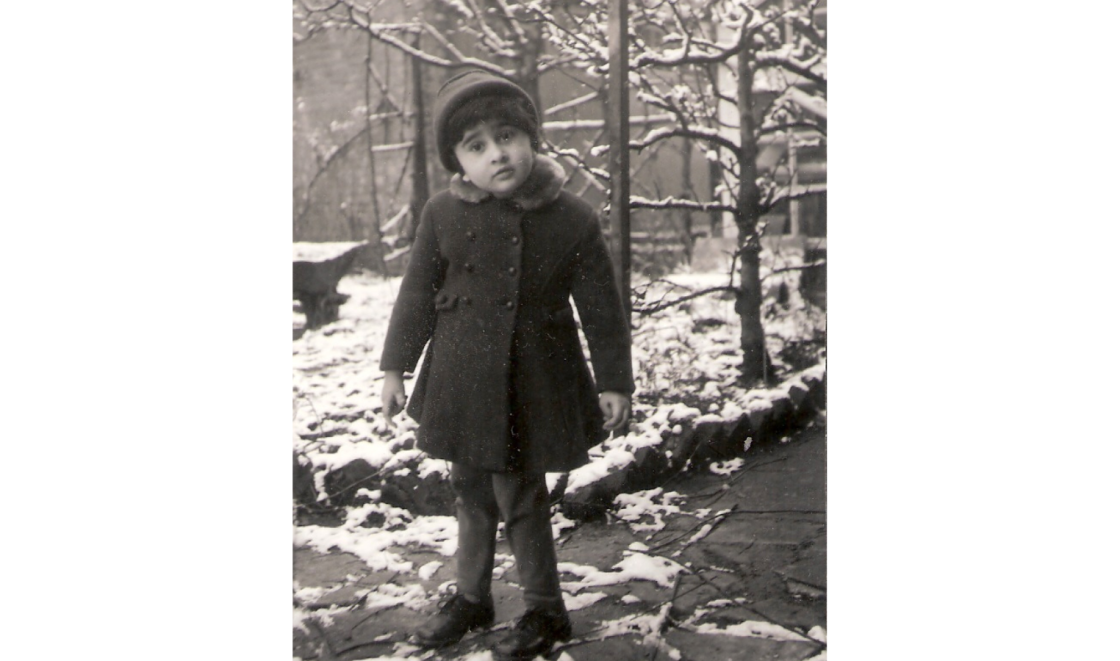
Savitri Hensman as a young child in London

Savi as a young child, London

In London, my mother was a teacher. Many of the children she taught faced deprivation, but using her great skills she was able to help many improve their educational, and hence health, prospects. Discrimination of various kinds was often blatant in the UK, in ways which now might seem shocking. Immigrants, especially people of colour, were widely regarded as a ‘problem’. Though then, as now, it was evident that public services would collapse if we all disappeared overnight! It was, however, a time in which discrimination and prejudice were increasingly challenged. 

My parents and older siblings had broad interests and a sense of fun. They also shared a commitment to a better world, including in Asia, Africa and Latin America. My parents knew many other anti-racist activists, though it took time for me to learn to accept myself, further complicated in adolescence, when it gradually dawned on me that I was lesbian. After a brief period of homelessness in other parts of London, my family found ourselves on a council estate in Hackney, in many ways a wonderfully diverse place, with many groups providing mutual support and striving for greater justice. 

The first time I led an activity aimed at influencing a determinant of health (though I would not have put it that way then) was when I was twelve or so. There was a sharp turning from the main road near my school, so pupils and staff risked being knocked down. I petitioned the council to put in a zebra crossing, gathering numerous signatures, though I did not succeed at the time. I would learn more about strategic use of the media later. 

In an east London marked by often violent racism, I became an active campaigner in my teens. By the age of twenty, I had come out at University College London (UCL), where I was studying chemical engineering. Back then, lesbian, gay, bisexual, trans and queer (LGBTQ+) people were largely invisible – I was the only openly LGBTQ+ person in my entire department and probably faculty, as well as the Christian Union.

Faith has been an important part of my life. I have seen how it has enriched the lives of family and friends of various religions, yet also how belief has been used to oppress and even destroy. Communities are complex, likewise identity, and ‘community leaders’ do not speak for all members.

Savi Hensman

Savi Hensman, involvement coordinator, ARC South London

Partnering in policy, practice and knowledge 

In 1985, a few years after graduating from UCL, I found my niche, as an outreach and development worker for the Black Lesbian and Gay Centre, a pioneering project run by and for LGBTQ+ people of colour/global majority heritage, where I served until 1994, when funding ran out. Initially based in Tottenham, the Centre moved to larger premises in Peckham in south-east London, not far from where I now work. 

Being active in the voluntary and community sector in various ways, paid and unpaid, had become – and remains – an important aspect of my life. I was also, and am, a writer. This includes writing on equalities, human rights and faith-related topics for national media, specialist and other publications. 

By then, I was involved in policy development alongside local and regional government officers and councillors, to further LGBTQ+ equality, including in social care and health. The broader push towards greater equality for women and minorities met with a backlash, in which politicians and media barons helped to whip up indignation. Yet there was also valuable, if sometimes heated, dialogue within communities, enabling progress. 

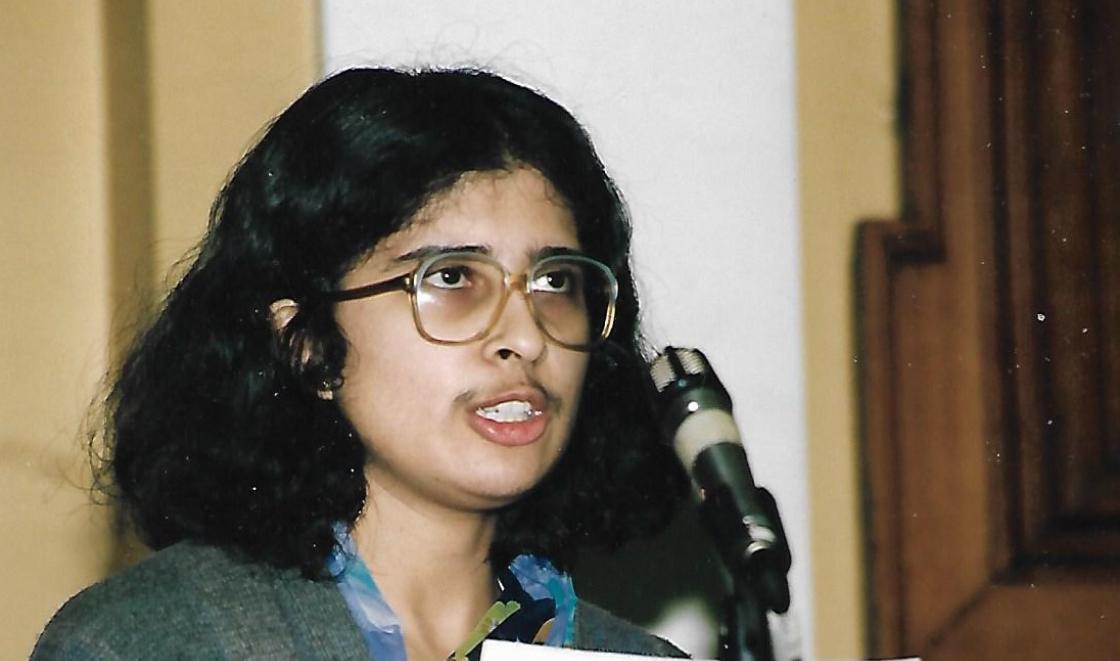
Savi at a talk

Meanwhile in my country of birth, the situation had gone rapidly downhill. Amid damaging austerity, politicians tried to win support from the majority Sinhalese community by promoting hatred and ethnic cleansing of the Tamil minority to which I belonged. Democracy was undermined and after years of state repression from the late 1970s, civil war broke out on a large scale in 1983, followed by a separate rebellion by mainly Sinhalese youth in the south, which was also brutally suppressed. 

Anti-government fighters as well as state forces terrorised civilians and I became active in human rights networks. It was frightening how quickly so many people – however educated, sophisticated and ordinarily kind and helpful – could be swept into supporting appalling cruelty or being in denial. Yet striving for justice and truth did make a difference.

‘Prevention’ is sometimes talked about as if mainly about individual effort to look after one’s health, yet failure to tackle extreme social injustice can leave health and care services swiftly overwhelmed.

Savi Hensman

Savi Hensman

Meanwhile in the UK, USA and many other countries, HIV/AIDS wrought havoc, including in communities of which I was part. Patient-led and community action, alongside the work of academic researchers, healthcare and public health staff (who, of course, were sometimes HIV+ or had loved ones who were) were vital. This included improving treatment quality, communicating accurate information in culturally appropriate ways and supporting those most affected. In and beyond work, I was part of a drive to make sure diverse communities were reached; and tailored what I said and wrote to take account of the fact that not all women could simply insist on their wish for safer sex being respected.  

This activity was not about patients and the public waiting to be invited to be ‘involved’ in something led by the proper authorities, though obviously levels of power and resources varied across sectors. Unfortunately, this type of partnership working for shared goals (which may include conflict as well as cooperation) is often left out of histories of patient and public involvement. 

By the late 1980s, I was with my life-partner, with and from whom I learnt a lot about health inequalities, care and research. We were together for 24 years, until she died of cancer. We were carers for two family members, then later others, while I also supported her through mental and later physical health issues. My caring responsibilities continue today, though on a lesser scale. 


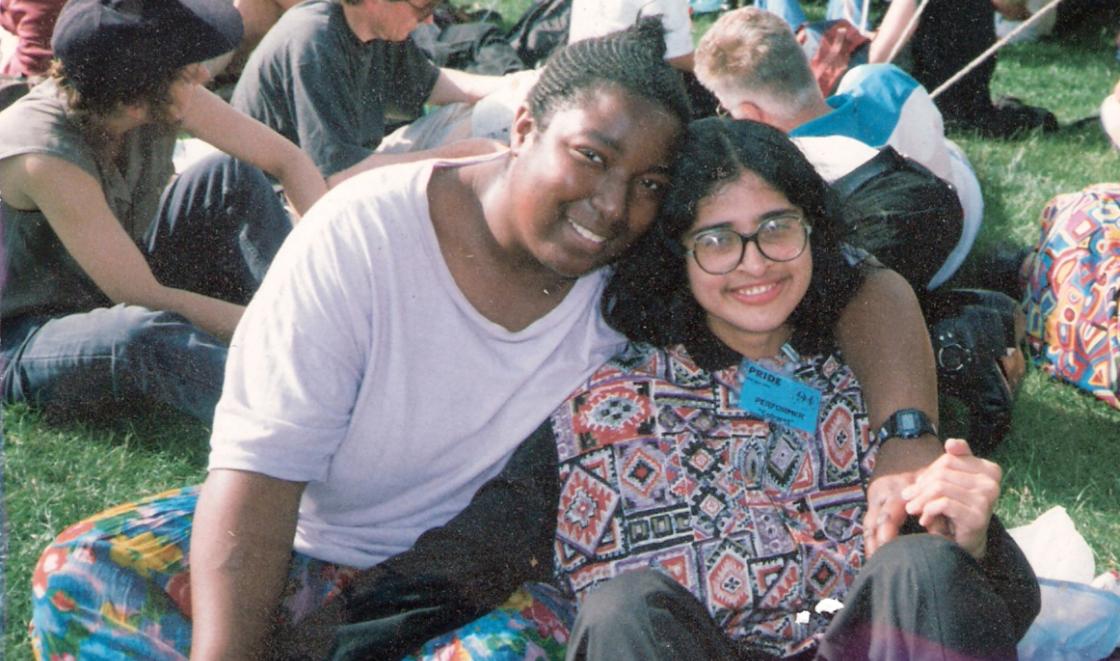
Savi (with partner Vijayatara), when performer at LGBTQ+ Pride

Savi (with partner Vijayatara), when performer at LGBTQ+ Pride

It was sometimes gruelling, especially where services were overstretched, ageist or otherwise non-inclusive, or when loved ones died. But I learnt a lot. This informed my next job, managing community care and health development services for a local voluntary sector umbrella organisation. This included being involved and supporting involvement, from the tokenistic to the genuinely co-produced. 

In the early 2000s, I started working for a social enterprise, which provided support to patient and public involvement forums and later a local involvement network, led by dedicated volunteers, as well as doing some work with the then Department of Health. I assisted patient representatives to draw on research and other reports in seeking to improve local health and care, as well as generate valuable knowledge which, even if not generalisable research, could flag up issues worth investigating further. 

Supporting involvement in NIHR applied research   

Constant reorganisation made this harder, followed by a period of worsening social inequality and division. Funds were scarce. In 2016, I saw an interesting-sounding patient and public involvement job advertised at the NIHR Collaboration for Leadership in Applied Health Research and Care (CLAHRC) South London and applied. I was pleasantly surprised to be appointed, which also meant joining the Service User Research Enterprise at King’s College London, made up mainly of researchers combining lived experience and academic knowledge, in mental health and other areas. From this, I gained a lot. 

In the NIHR Applied Research Collaboration (ARC) South London, which followed the CLAHRC, I took on more responsibilities, including being lead organiser of annual involvement events, working closely with research teams to encourage and share good practice and promoting greater understanding of the importance of tackling inequalities, in and beyond the organisation. Throughout all this, teamwork has remained crucial. I’m pleased to see that diverse and inclusive involvement has become more embedded, though there is still a long way to go. 

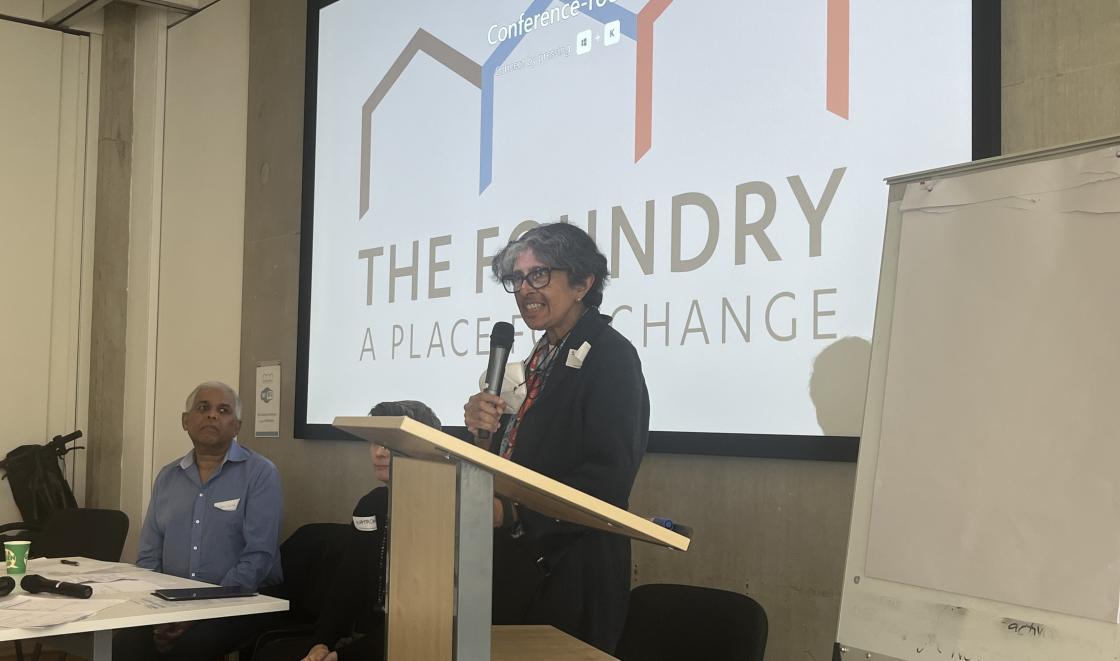
Savi speaks to attendees at Active Involvement in Research 2026

Savi speaking at Active Involvement in Research (AIRD) 2025, ARC South London's annual involvement event

I have acquired various long-term conditions over the years and lived experience continues to offer opportunities to learn. I recently found myself learning how to trundle a drip stand along aisles of hospital beds to, and into, ward toilets, very inelegantly! This followed my first experience of major surgery.  

I was fortunate to receive very good hospital and primary care overall, though services were clearly overloaded. I was aware of the feeling of vulnerability, which probably many inpatients share, especially when reliant on others for meeting basic needs. Yet I knew that staff and medical and nursing students too, were vulnerable, in various ways. For me, being able to go home to a warm flat, with nutritious food, support from family and friends, and enough money for an occasional minicab back to hospital for ongoing care, made recovery far easier than is the case for everyone. 

After all my years working in research and evidence-informed environments, I do not regard academic researchers as supplying the ‘objective’ knowledge and lived experience contributors the ‘experiential’. Distinctions are not so neat; and in my view, humans in general, can be both wonderfully logical and insightful, and wildly irrational! Systemic issues, including the influence of political pressures, corporate lobbying and target culture, create further problems.

Savi Hensman

Savi Hensman

Whatever the future holds 

I am uncertain what I will do after ARC South London ends in March 2026. Yet whatever the future holds, I deeply value my years here. Patient, service user, carer and public contributors, community partners and fellow staff in the ARC and connected organisations, have helped me reflect and grow. I do not intend to hover around passively, hoping somehow that public health and wellbeing will improve of their own accord, but rather to work with others in some way, in seeking a more just and compassionate world. 

Find out more

Read more about patient and public involvement at ARC South London

Subscribe to Together in Research, our dedicated patient and public involvement newsletter, to make sure you don’t miss our final edition

Savi Hensman is also a member of the Service User Research Enterprise (SURE). You can find her here on LinkedIn