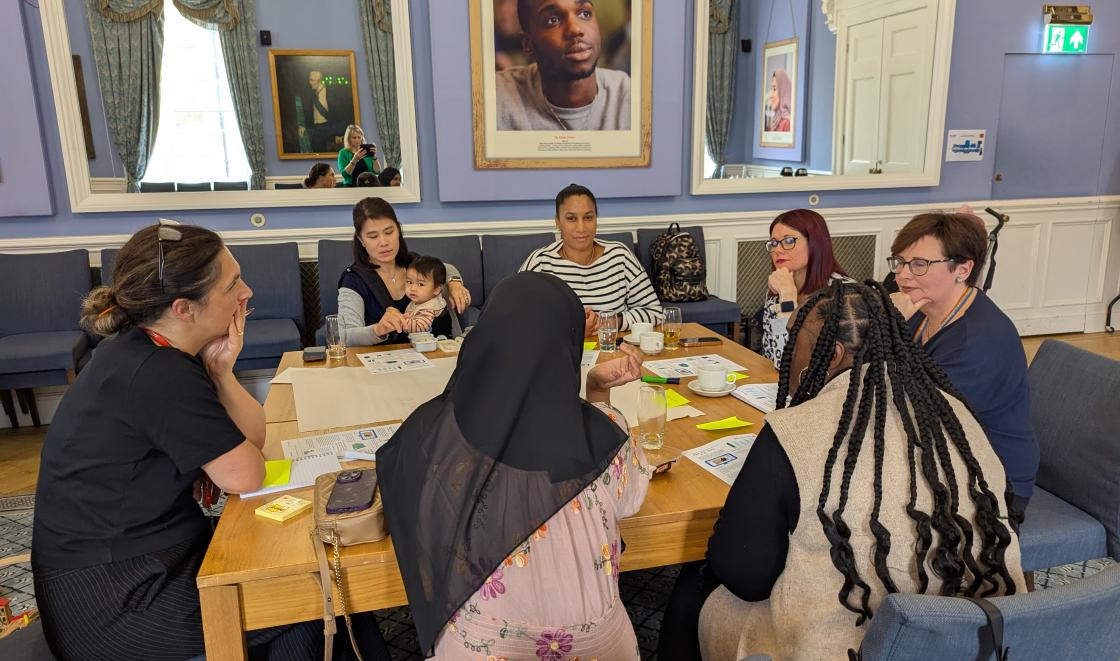
Some of the key tips and learning in the report include:
- Plan for inclusivity from the start - Equity, diversity and inclusion (EDI) are three important values to guide who you involve and how you work together. Share what all team members know and think about training needs. ‘Trauma-informed’ working may be important, too, depending on your study.
- Work your community connections- Researchers need community connections and links with relevant voluntary sector organisations. It takes time to build trusting relationships; finding community leaders or well-connected individuals is an important step.
- Values matter - At an early planning meeting, it may help to create a list of values that you want to adopt explicitly. Here is an example of a values statement developed by an ARC- adopted research study, the MUMS@RISC: Charter for research engagement
- Consider the evidence you need for reporting PPIE - If you aim to report the impact of PPIE in research, be sure to collect sufficient data in enough detail. The Public Involvement in Research Impact Toolkit (PIRIT), for example, may be a helpful guide.
- Build in review discussions and reflections - Reflect as you go along, audio-record (with permission) and write things down. This is valuable as public involvement is a complex process. It is impossible to think of everything or address every aspect of PPIE aims and methods in advance.
- Everything will take much more time than you anticipate - Like every other aspect of research, doing public involvement well takes time, thought and effort. So, it’s important when planning to double and triple the time you think might be needed.
- Relationships are important - The more opportunities there are for the whole team to interact, share something about themselves that is not related to the project and have a laugh (or extend empathic listening) the more easily the wheels will turn.
Find out more
Read the report – Diversity, relationships and community leaders – Public involvement tips and reflections from the RELAX (Reducing Levels of Anxiety in pregnancy and after birth) research project.
The report was co-produced by Mary Newburn, patient and public involvement and engagement (PPIE) lead for the RELAX (Reducing Levels of AnXiety in pregnancy and after birth) project; public involvement advisers, Abi Gay, Abigail Mensah, Siobhean McCarthy-Perham and Tanjida; and King’s College London researchers, Brittannia Volkmer, Colette Hirsch and Nathalie Towner.
Find out more about the RELAX study