I joined King’s Improvement Science (KIS) in 2024 as a patient and public involvement (PPI) member. The KIS research programme, which ended earlier this year, aimed to improve the quality of health and social care for people across south London and beyond. 

PPI members use personal, professional or community experience, such as being a patient, carer or member of the public, to help shape research and health and care priorities. From the outset, such individuals were central to the work of KIS. 

Currently pursuing a master’s in public health at Queen Margaret University and committed to advancing equity and inclusion in health research, the role felt like a strong fit for me and has been a vital part of my early public health journey. As someone who has often struggled with confidence and visibility, my role as a PPI member became a space where I gradually felt more able to contribute as an equal. Being trusted to take part in this role shifted my understanding of what meaningful involvement looks like. It showed me that participation is not just about talking but about shaping decisions and influencing real work. 

This November, I was asked to present some of my work to the European Economic and Social Committee (EESC) at the European Union (EU) in Brussels. I had submitted an essay titled ‘Societal resilience in the face of rising security challenges including disinformation and economic warfare’ to a competition for the chance to attend the Brussels Security Bootcamp, part of Young Thinkers 2025. My essay highlighted that health security cannot be separated from Europe’s wider hybrid security landscape. 

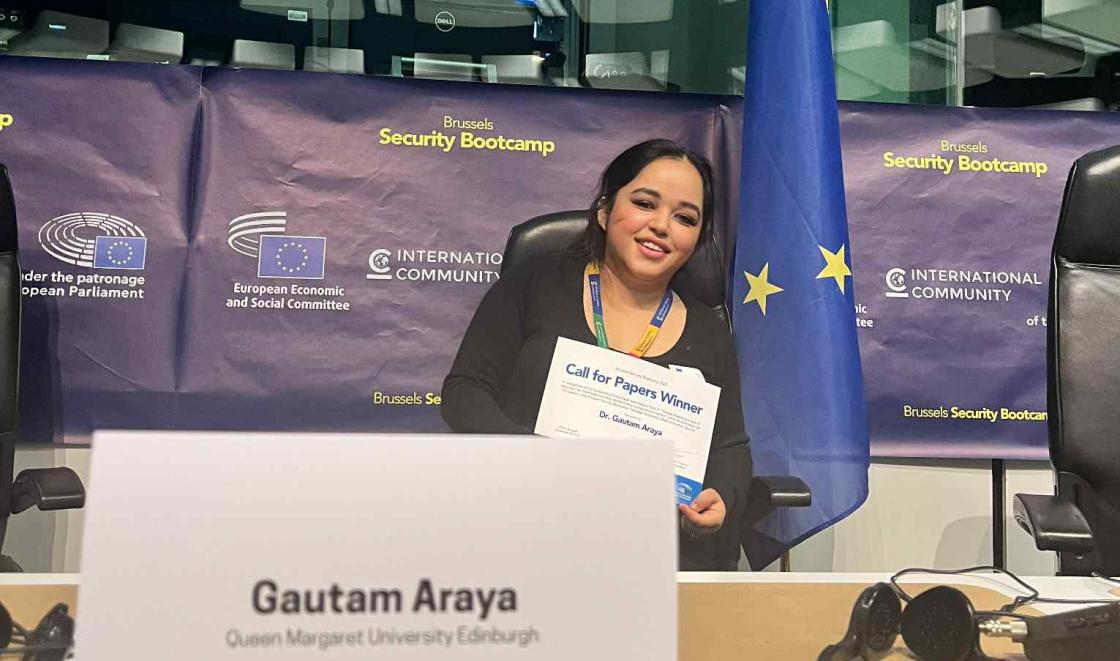
Araya Gautam at the European Economic and Social Committee, pictured with her 'Call for Papers Winner' Certificate

Disinformation, supply-chain disruptions and political instability directly weaken health systems and erode public trust and access to care. Recognising health as a core pillar of hybrid security is therefore vital to safeguarding societal resilience. Strong public health preparedness, transparent communication and coordinated international responses are not only health priorities but strategic security imperatives.

Authors of successful research articles were invited to attend a series of expert-led workshops, institutional exchanges and high-level policy discussions before presenting their work to the EESC. As a student with limited resources, I would not have been able to attend the event even though my essay had been accepted, so the KIS PPI development fund covered my travel and accommodation. 

Earlier opportunities to speak through KIS, such as a webinar where I presented work creating a questionnaire to meaningfully assess people’s experiences of involvement, had helped build my confidence and prepared me for presenting in a much larger setting. On that occasion, I spoke to more than 50 stakeholders, including quality improvement leads and PPI coordinators nationwide. KIS’s investment in me has felt personal and like more than just financial support. 

Speaking at the EESC felt surreal. Representatives from 27 countries were present. I was one of the youngest speakers and very aware of being one of the few people from a minority ethnic background in the room, which made the experience even more significant to me.

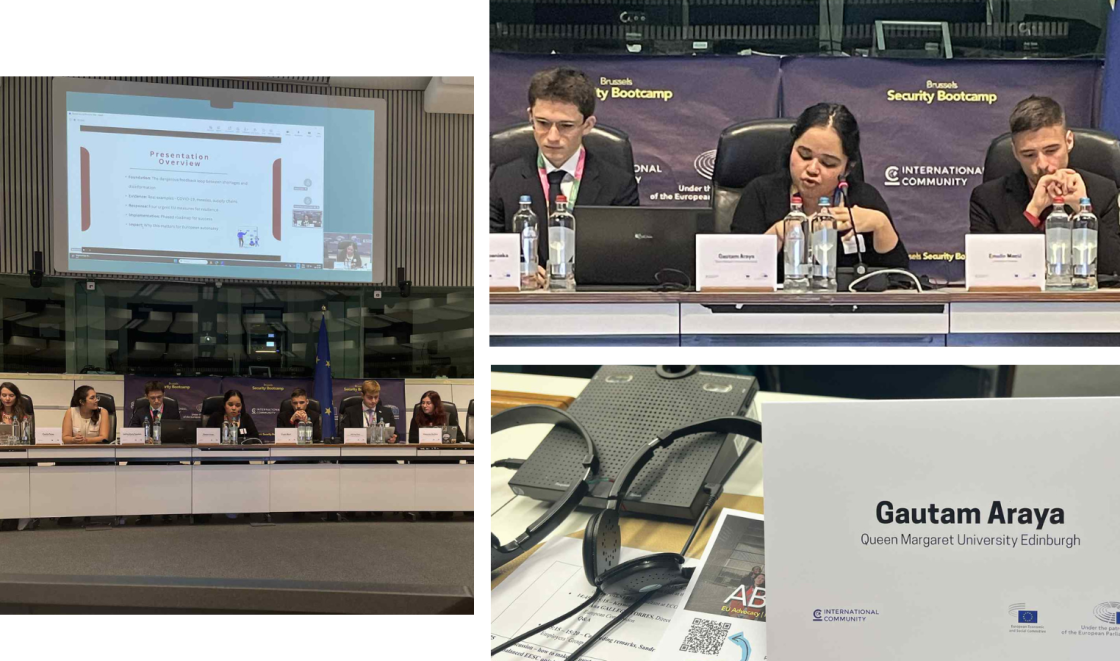
Araya delivers her presentation and joins a panel discussion at the European Economic and Social Committee

Walking into the EU buildings for the first time, seeing the Parliament structure and standing behind a podium in one of the world’s most influential institutions was unforgettable. Carrying the flag of the UK alongside my Nepalese heritage and the identity of underrepresented students made me extremely proud.

My presentation focused on global health preparedness and the urgent need for Europe to strengthen its resilience. I spoke about antibiotic dependencies, highlighting the EU’s reliance on external suppliers for the ingredients used to produce antibiotics. Approximately 60% are currently sourced from China, creating significant supply-chain vulnerabilities. I explored how pandemics like Covid-19 expose structural weaknesses and how we must respond better in times of crisis. I built on themes drawn from both my public health training and my lived experience. 

Other presentations on the day examined the wider security landscape in Europe. Several speakers discussed the ongoing Russia-Ukraine war and its implications for European stability, highlighting how external conflicts reshape internal political and economic priorities. Others addressed the growing importance of cybersecurity and how Europe can strengthen its defences against cyber-attacks, digital espionage and information warfare. 

There were also discussions on the representation of women within European institutions, with comparative analyses showing that uneven participation persists across EU countries. Although these themes were outside my own presentation, they provided essential context for understanding the complex and interconnected pressures shaping Europe’s resilience. 

This experience has been a turning point in my journey, and it was an honour to take part. Sharing these insights in such a prestigious environment made me realise how far I have come and how far I can go. 

Find out more  

Read more about the legacy of the King’s Improvement Science programme, including a previous blog from Araya and other contributors introducing the 4Pi involvement experience questionnaire

Find out more about the Brussels Security Bootcamp 2025